Colorado Woman Sports
Good stories don't have a gender preference
-

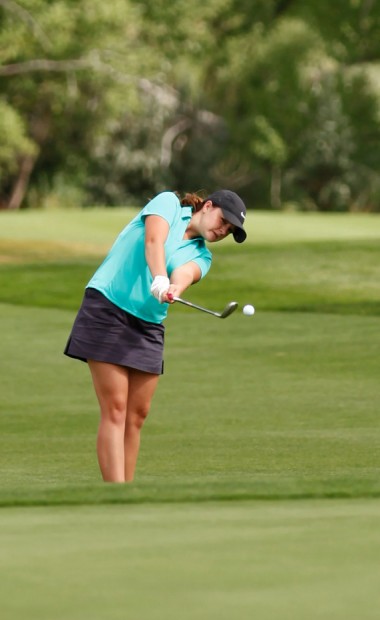
Freshman recruit Sabrina Naccarato pitches the ball onto the green during the women’s golf tryouts Aug. 27. Photo by pposton1@msudenver.edu
By: Angelita Foster
The newly formed Metro women’s golf team finished 12th Sept. 8 at the Colorado State University-Pueblo Open, a historical first for the university. The team shot 710 for the two-day tournament, exceeding head coach Ben Portie’s expectations.
“There were 15 teams there, and we competed against some schools that have had programs for a long time, and we at least stayed competitive with those,” Portie said. “I know this being our first year we have some learning to do, so we are just going to keep trying to improve and keep getting better.”
The Roadrunners are a small team, only five players – two juniors and one sophomore transfer, a sophomore who hasn’t played at the college level, and a freshman – but Portie can work with that.
“I’m liking what they are doing in practice and they are only going to get better,” Portie said. “We have five and this is what we are playing with. Getting this team better, that’s my job.”
Junior Jazmine Roland shot a two-day total 167, tying for 29th place. Sophomore Valerie Cruz shot 168 for 32nd, junior Dani Look shot 174 placing 40th, walk-on player Lauren Barrett placed 70th shooting 205, and freshman Sabrina Naccarato shot 217 for 73rd.
-

Metro women’s golfer junior Jasmine Roland. Environmental portrait by Courtland Wilson • cwils104@msudenver.edu
by Angelita Foster
Raised in small-town Cottonwood, Ariz., Jazmine Roland didn’t have the advantage of well manicured greens or a golf professional, or even a girl’s team to play on – what she did have was the drive to succeed at a sport she loved, no matter the adversity she had to face.
Roland is a self-taught golfer, having learned to play alongside her dad and brother. By the time she got to high school, Roland found a love for the sport , and with no girl’s team, found a spot on the boy’s team, where she didn’t really feel welcome.
Roland said at the time, she didn’t think about playing by different rules because she was a girl — she never played from different tees than her dad and brother. Thinking back on it now, Roland says that made a difference in who she is as a person and as a golfer.
“It was super difficult for me to want to continue because I didn’t really have the support that I wanted or needed while playing,” Roland said, referring to her teammates and the school. “I’m glad I did it, because I learned a lot about myself being able to continue playing through that.”
When Roland arrived at Mesa Community College, she was welcomed to the women’s team, something she hadn’t experienced before, but she then faced new challenges — competing against athletes that grew up in the sport, and being slightly behind academically.
“The girls I played on the team with had a lot more opportunities available to them, more than I did in the small town I was from,” Roland said.
She overcame the challenges by redshirting her second year to focus on school and analyze her game.
As a sophomore, Roland was named first team all-region and all-conference, but she wasn’t shooting to impress when she met Metro head coach Ben Portie.
“I think I shot in the 100’s that tournament,” Roland said.
But, the wheels had already been put in motion, and Portie knew about Roland and recruited her for Metro’s new women’s golf team.
“She has played as I expected. She shot a low of 78 this fall for us, which was her lowest in a golf tournament,” Portie said. “I always knew she was going to count for our team.”
-
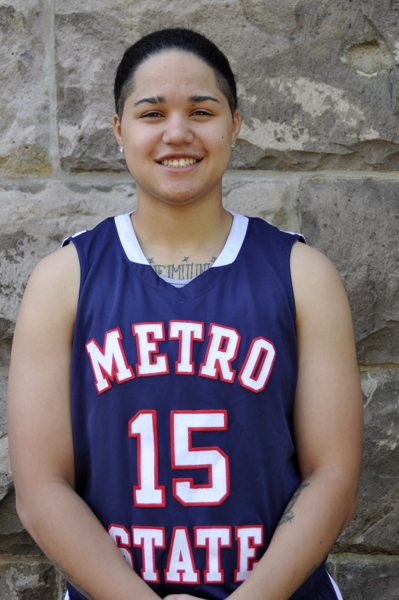 “I think the recruiting process for athletes going from high school to college is the same for females and males. As a female, I have an opportunity to get a scholarship, to get a free education for my athletic ability just like a male does.” ~Jenessa Burke, Basketball, Sophomore
Title IX turns 40 this year. It’s 2012, and as women throughout the country celebrate the law that changed the face of gender equality, female Metro students go about their business with little recognition – a testament of Metro’s commitment to equal opportunities for its students.
In 1972, when President Richard M. Nixon signed Title IX into law, women were a minority at colleges and had limited opportunities in education, access to scholarships and little to no access in sports. Although the law is recognized as an equalizer for participation in sports, it doesn’t mention athletics. Title IX is about more than equal rights for women in sports, it’s really about making sure women have access to the same opportunities as men.
At Metro, Title IX falls under the Office of Equal Opportunity headed by Metro executive director Percy Morehouse, who knows that it takes more than just complying with the law to improve gender equality among Metro students and athletes.
“Before Title IX, women were discriminated against in the type of courses they would take, which ultimately affected the types of jobs they would get,” Morehouse said. “There were fewer women taking math and science, and that translated into fewer doctors, attorneys and engineers, [which were] predominately male fields.”
Four women graduated from Metro with a science or math degree in 1972. In 2012, that number increased to 173, a 7.11 percent increase in 40 years. Morehouse thinks that number could be improved with programs like Metro’s equity assistance center.
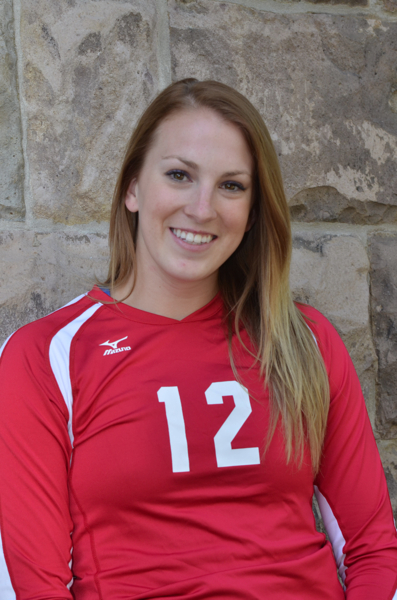 “I think the biggest accomplishment of Title IX is how many female athletes are able to participate in sports at a collegiate level and professional level.” ~ Alex Green, Volleyball, Junior
“Through this program, we offer training and other resources for K through 12 schools in six states to help promote equal educational opportunities for all students,” Morehouse said.
The EAC is one of 10 regional centers funded by the U.S. Department of Education under Title IV of the 1964 Civil Rights Act.
Educating Metro about gender equality doesn’t stop with students. Metro will hold Title IX training in August for various associate and assistant deans, as well as other administrators at Metro.
Title IX opened up more opportunities for financial assistance in the way of athletic scholarships. In 1989, a complaint was filed that Metro offered more funding for men’s sports than women’s. The claim was investigated and Metro was found to be noncompliant. Metro responded by adding scholarships for the volleyball program.
“Our goal is to make sure that men and women athletes have equal opportunities,” Metro athletic director Joan McDermott said.
Compliance is a bit of a numbers game and although some colleges struggle, Metro is proactive about meeting requirements.
“The first step is participation and matching that to the colleges overall percentage of male to female population. That is something we are always looking at,” McDermott said.
Metro was ahead of the game in regards to women’s access to athletics with volleyball, softball, basketball and track teams that were fielded in 1968. Tennis and swimming teams were added to the women’s sports program in 1971. The women’s soccer team formed in 1980 and made it to the NAIA semi-finals in 1984. Metro is in compliance but will be adding women’s golf in 2013.“I think it’s [Title IX] helped me because this is why I’m here. They give you equal rights for men and women to play sports,” senior soccer defender Hayley Renko said.
“That’s the reason I’m here and I have a scholarship, so I think it’s helped me get to this point.”
Women coaches at Metro have also benefited from Title IX with increasing opportunities to transition from player to coach at the collegiate level but their experiences with the law is very different from the athletes they coach. In 1968, all of Metro’s women’s teams were coached by Patricia Johnson and Jane Kober. Now, each team has a coach specifically for that sport. All of Metro’s women’s team are coached by women with the exception of track and field and cross-country. The men’s tennis team is coached by female head tennis coach, Beck Meares.
Many Metro athletes don’t remember a time when girls didn’t have teams or money for uniforms, access to playing fields or college scholarships. Metro softball head coach Kristi Lansford experienced the benefit of Title IX first-hand.

“I think Metro does a good job at treating female athletes in an equal manner. They don’t do it because they have to, they do it because it’s the right thing to do.” ~Volleyball Head Coach Debbie Hendricks
“I grew up playing football and baseball with the boys in my neighborhood, and when they signed up for little league, I tried to sign up too and they told me no. So I became the scorekeeper,” Lansford said. “When I got out of the Air Force and went to college, it was a different story and I had opportunities in softball because of Title IX.”
Women’s head basketball coach Tanya Haave doesn’t think it is a bad thing that today’s female athletes don’t know about the law that gave them the numerous opportunities they now have.
“I think it’s a tribute to the leadership at Metro that our athletes don’t know the struggle. They have grown up not really knowing anything different,” Haave said. “But I do think that it is important for our athletes to be educated about Title IX so they know why they have the opportunities they have.”
Story by Angelita Foster
Photo credit Melanie J. Rice -
Jablonski: skill and confidence in the net
![20131005-4740S-Nicole-Goalie-0059-toned-413x620[1]](https://coloradowomansports.com/wp-content/uploads/2014/08/20131005-4740s-nicole-goalie-0059-toned-413x6201.jpg?w=194&h=292)
Metro women’s soccer goalkeeper Nicole Jablonski chose MSU Denver and Division II over numerous Division I offers.
Photo by Danielle Shriver • dshrive2@msudenver.eduBy Angelita Foster
Nicole Jablonski isn’t big physically. At only 5 feet 5 inches, she doesn’t take up much of the net, but this freshman goalie can play big.
The four-year letter winner from Walled Lake Northern High School in Commerce, Mich. is a two-time all-conference and all-district player. As team captain, she was part of city champion teams her junior and senior years, and division champions as a senior.
Jablonski had nine shutouts as a junior and eight as a senior. Before leading her Vardar Michigan U17 team to the Elite Clubs National League Elite 8, where she met Metro women’s soccer head coach Adrianne Pietz, Jablonski didn’t consider Colorado or Division II.
“This was actually the only Division II school I considered,” Jablonski said. “The team was really successful when I was looking at them, and they still are, so that was another big reason I wanted to come here.”

Jablonski said her love for the game came at a young age, starting out at midfield and forward, but she found her success in the net while in middle school.
“I like making big saves,” Jablonski said. “How other players feel when they score a big goal, that’s how I feel when I make a big save — that kept me in it.”
Being a leader is part of the goalie’s job, and the 18-year-old is comfortable with that, even as she settles into the Division II level of play.
“They expect you to talk in the back and lead by directing, and over the years I have learned what works and what doesn’t,” Jablonski said confidently. “It was a little intimidating at first, but the team was pretty good at bringing me into it.”Pietz said she is pleased with how Jablonski has done this season and with her contribution to the team.
“I think for her, it’s hard to come in as a freshman and play at a high level right away, but she’s done a good job,” Pietz said.
“She’s a confident goalkeeper, she has a great work ethic, and I think she continually improves on the things she needs to improve upon.”
Coming into the season, Jablonski said that she is happy with how things have worked out.
“I just expected to get some play time in and do my best,” Jablonski said. “I was pretty lucky to start as many games as I did. It was a surprise to me and I am happy with how I came in.”
Jablonski has no delusions about staying in the starting lineup, especially with fellow freshman Karisa Fernandez on the roster.
“Karisa is really good, so we are both constantly trying to get each other to play better at practice and on the field,” Jablonski said.
In talking about Jablonski’s future on the team, Pietz only had positive things to say.
“She has a tremendous work ethic, and I think she is going to continue to improve,” Pietz said. “Regardless of who’s starting a game, I feel like they are both being supportive of each other, and in there pushing each other to be the best they can be for this team.”
![20131005-4740S-Nicole-Goalie-0059-toned-413x620[1]](https://coloradowomansports.com/wp-content/uploads/2014/08/20131005-4740s-nicole-goalie-0059-toned-413x6201.jpg)
 Colorado Woman Sports